From security of supply to certification, companies in the agricultural supply chain face major challenges. Climate change, pressure on raw materials and changing regulations make it more difficult to link yield, quality and sustainability. Anyone thinking chain-wide therefore needs one thing: insight. Field data is indispensable in this: it shows early on what is happening in the crop and enables the right choices - well before the harvest starts. TTW was founded in 1987 from exactly that idea: by structurally measuring and analysing what is happening in the field.
That approach took shape in a conversation in a barn that same year. Arie Struik - then a Ford representative and later founder of TTW - was there talking to a chicory tractor about persistent diseases in carrots. His question: ‘How can we get a grip on this?’ became the starting point of a way of working that is unique to this day. What started with a notebook and curiosity grew into a digital system with almost 40 years of plot-specific cultivation data on a wide variety of crops.
“I had no experience in cultivation, but I saw growers struggling with questions to which there were no clear answers,” Says Shrub. “By measuring, comparing and seeing what yielded the best results, we were able to develop a set way of doing that together.”
TTW links technology, data and practical knowledge into concrete advice. Every week, specialists collect field data: from soil and crop condition to nutrient status and growth course. These data are linked to TTW's own system: a unique database containing thousands of measurements per variety, field and soil type. This results in advice that matches the actual conditions of each field.
“If you know how a crop develops, you are also more likely to know what to expect in terms of grading, storability and use value,” explains Hans Vroegindeweij, a crop consultant at TTW for 38 years. “For example in chicory: a tractor that used to buy carrots never knew exactly what he was getting. Now we follow the growth, and you already know during the season how a batch will behave. This approach has spread to other crops, such as potatoes, onions, bulbs and chicory.”
That plot-specific insight gives both growers and chain parties peace of mind and clarity. It makes harvest planning predictable, helps deploy resources only where they are really needed and prevents waste. Soil and environment are spared and the resilience of the crop increases.
“A well grown product is automatically sustainable,” Arie Struik said. “Because it is built with care and knowledge - not assumptions, but based on what the crop actually needs.” Hans adds: “The sector is getting tighter and tighter boundaries, and that requires more precise control. This creates grip on processes that are increasingly decisive for yield, sales and a high-quality product.”
What makes this method unique is not one technique or analysis. It is the combination of field knowledge, measurement data and technology. In an industry that has to work with increasing precision, this makes it possible to achieve more results with fewer resources - and to demonstrate that performance. That way, the sector - from growers to producers and processors - can work together to make agriculture future-proof. Not on the basis of assumptions, but on insight that rings true.
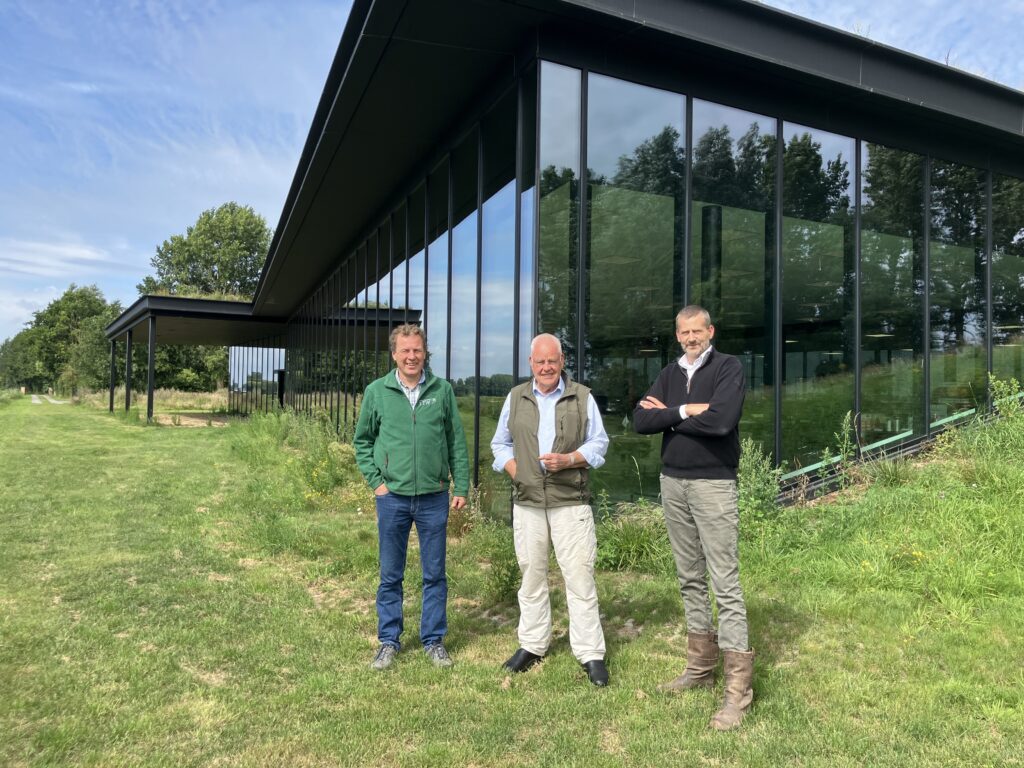
From left to right: Hans Vroegindeweij (crop advisor at TTW), Arie Struik (founder TTW) and Jacob Struik (CEO TTW).